Something is changing in how commerce works, and most brands have not noticed yet. For thirty years, the entire discipline of being findable online assumed a human on the other end. You optimised for search. You bid on keywords. You designed every product page for a person to read and a person to click. That assumption is quietly breaking. AI is no longer just answering questions. It is starting to act on its own:
- Acting autonomously.
- Discovering products.
- Comparing alternatives.
- Completing purchases.
- Evaluating what it bought.
Not in theory. In production. Agents are already discovering products, comparing alternatives, and completing purchases on behalf of the people they work for. The next buyer your brand serves may never load your website at all.
The financial rails are already being laid
None of this works without a way for an agent to pay, and that part is arriving fast. Emerging standards like x402 and AP2 give an autonomous agent a way to hold value, present credentials, and settle a payment without a human in the loop. The plumbing that lets software move money on its own behalf is being standardised right now, and it is being taken seriously by the largest payment networks in the world.
But money is only half of a transaction.
Money tells an agent how to pay, not what it is paying for
A payment rail answers exactly one question: how does value move from buyer to seller. It says nothing about the thing being bought. For digital goods, that gap does not matter, because the product and its data are the same object. A song, a licence, a subscription. The thing you buy is information, and information is already machine-readable. The agent can inspect the entire product because the product is data.
Physical products are different in kind, not degree. The jacket and the facts about the jacket are two separate things, and only one of them has ever really been online.
Why physical products break the agentic playbook
Most of the conversation about agentic commerce is really about advertising: how to make a listing legible to a bot instead of a human. That is the digital-services view of the world, where the transaction ends the moment money changes hands. Physical goods do not behave that way. Their life is only beginning at the point of sale.
A jacket is manufactured in one country, shipped through three, and sold in a fourth. Over its life it changes ownership three or four times: resold, refurbished, recycled. Dozens of stakeholders touch it, and each one holds only a fragment of the truth about it:
- The factory that made it.
- The brand that put its name on it.
- The retailer that sold it.
- The marketplace that resold it.
- The recycler that recovered it.
None of them holds the whole picture. The truth about the object is fragmented by design, and most of those fragments were never written down in a form a machine could read.
What an agent actually has to do
In that world, the agent's task is not the tidy 'find me a product' of the digital-services era. It is something far harder:
“Verify this physical thing is what the seller claims, trace where it has been, confirm who owns it now, and settle a transaction that respects everyone with a stake in it.”
No agent can do that today, because the truth about a physical product is severed from the product itself. It is scattered across private databases the agent cannot query, paper certificates it cannot see, and receipts thrown in the bin. The object moves through the world while the facts about it stay behind, locked in systems that were never designed to talk to anyone, let alone a machine acting on a stranger's behalf.
Agents are blind to physical products
Strip the problem down to a single object and the gap is impossible to miss:
- A shoe has no machine-readable identity an agent can read.
- A phone has no verifiable provenance an agent can check.
- A second-hand jacket has no ownership history an agent can trust.
“The entire financial layer for agent commerce is arriving. But the identity layer for the physical goods those agents need to transact on does not exist.”
The identity layer has to be open
It is tempting to assume a single company could simply build this layer and sell access to it. But consider what that record actually is: who owns what, where it came from, and whether it is real, across billions of products. If one corporation owns that, it owns your ownership. You end up renting proof of your own possessions from a company that can change the rules or disappear.
The layers that became universal never worked that way. Email never belonged to one company. The web ran on TCP/IP. They were open standards everyone could build on and no one could revoke, and that is exactly why they lasted. There is also a colder, more practical reason this layer must be open: a neutral record is the only record an agent can trust. An autonomous agent cannot safely act on data controlled by a counterparty with an incentive to shade the truth. Openness is not an ideology here. It is a precondition for the system to function at all.
That is why we are building the Universal Goods Protocol
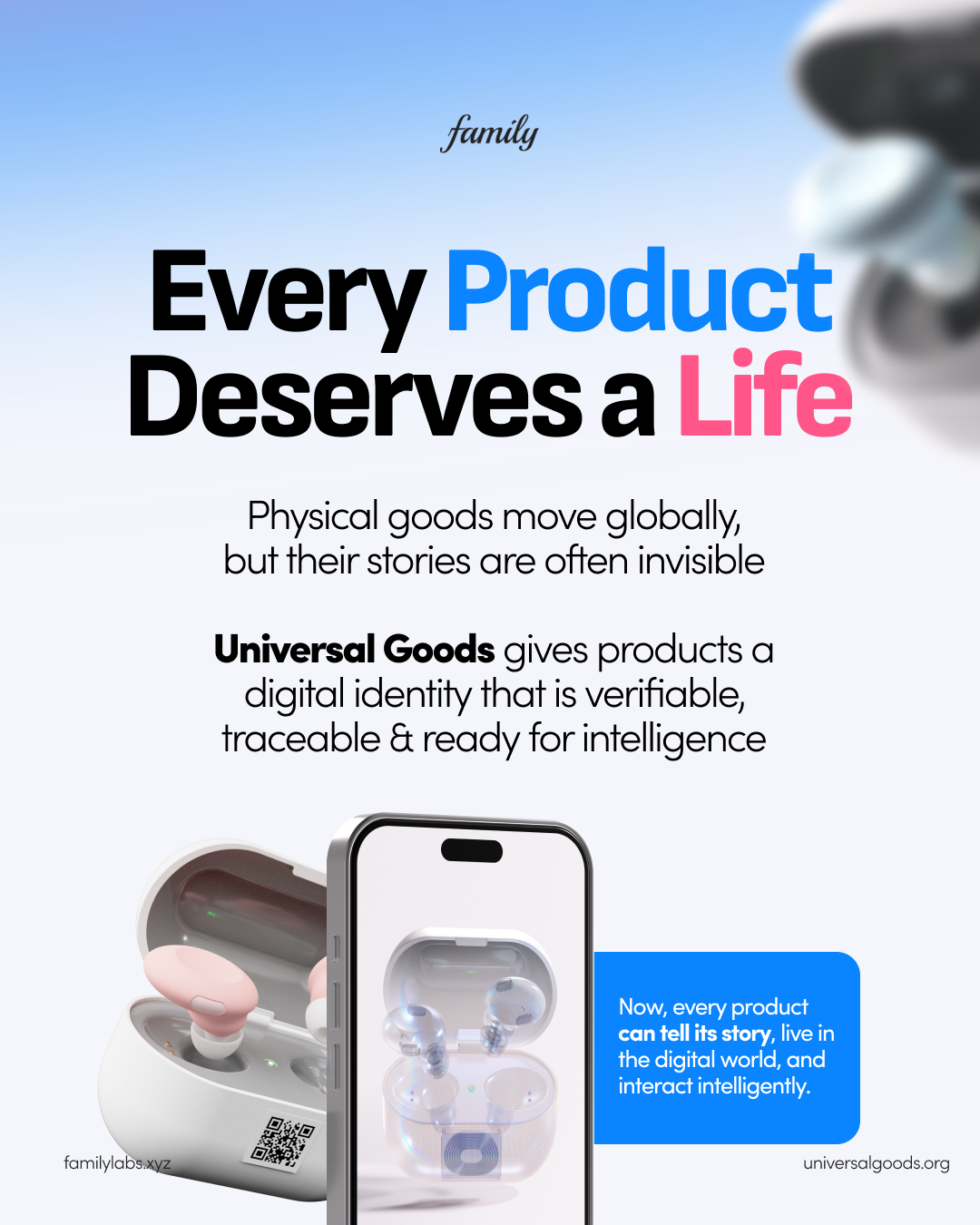
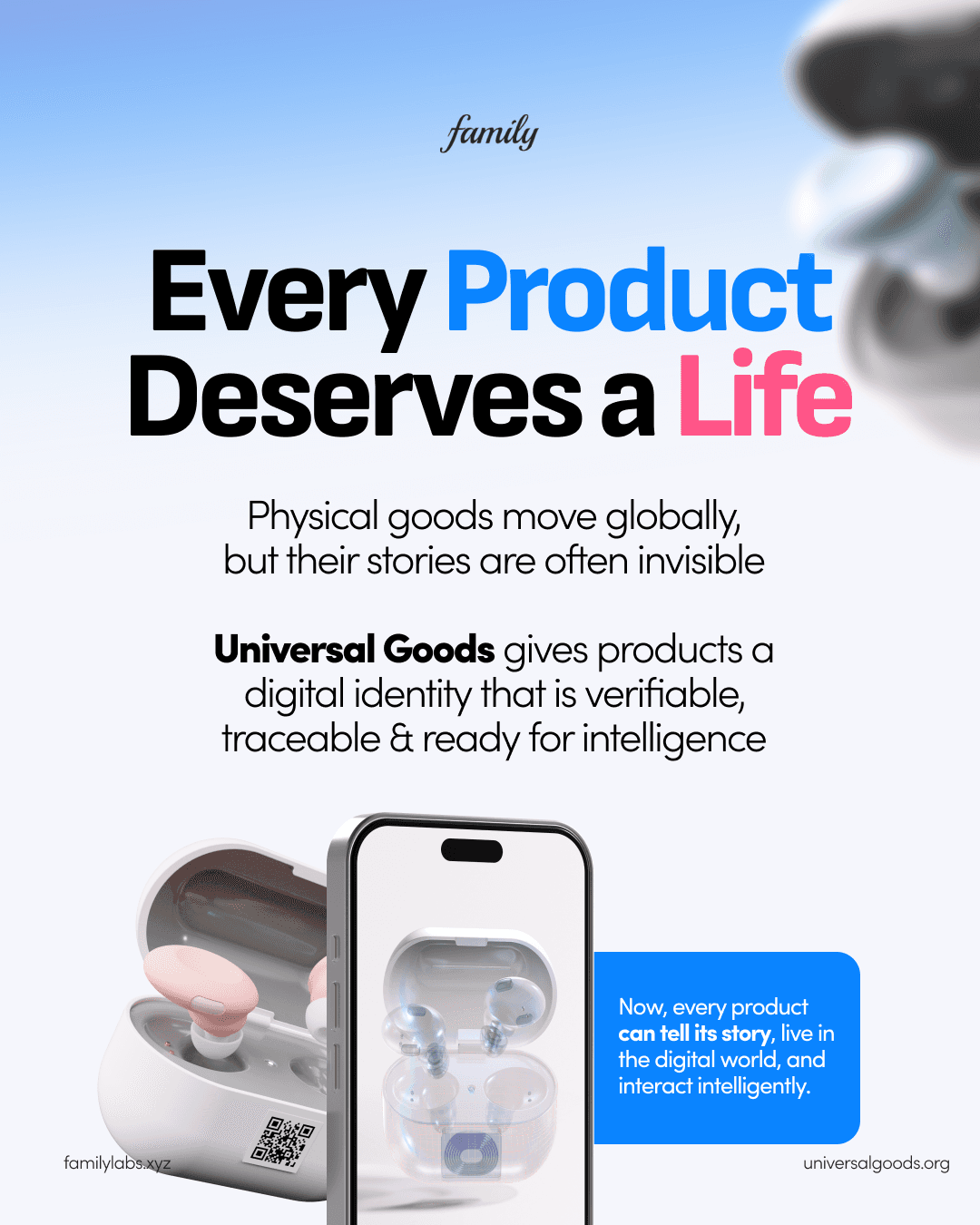
The Universal Goods Protocol gives every physical product a verifiable, machine-readable identity on LUKSO, owned by the person who holds it rather than by us, and readable by anyone who needs the truth of a product: brands, third parties, and agents alike. Each identity carries what the thing is, where it came from, and who owns it now, structured to satisfy EU Digital Product Passport requirements so the same record that keeps a brand compliant is the one an agent can read.
It is built so the complexity stays out of sight. Ownership is handled through Universal Profiles rather than seed phrases, settlement can run in stablecoins rather than multi-day banking rails, and the labour of gathering and structuring supplier data is automated by Scout, our AI supplier agent. The brand meets compliance, the consumer simply owns what they hold, and the agent gets a clean, neutral source of fact to act on. None of them has to think about the protocol underneath, any more than you think about TCP/IP when a page loads.
The money layer and the identity layer have to arrive together. One without the other is an agent that can pay but cannot see, or one that can see but cannot settle. We are building the half that does not exist yet, so that when agents are ready to transact on the physical world, the physical world is ready for them.
James Albarracin is the Founder & CEO of Family Labs, the company behind the Universal Goods Protocol, open infrastructure that tokenises physical products into programmable digital assets via EU-compliant Digital Product Passports.